


After 9 Years of Piercing Ears, I Started Noticing The Same Strange Pattern
Women Would Come In With Piercings They'd Had For Years, Suddenly Red, Itchy And Sore. Then I Noticed The Same 2 Things Over And Over Again.
Most of them had already tried “hypoallergenic” earrings, better metals, flatbacks, and extra cleaning. They assumed their ears had simply become sensitive. But when I looked closer, something else kept showing up.


“I USED TO WEAR EARRINGS ALL THE TIME. NOW MY EARS CAN’T HANDLE ANYTHING.”
Every week, someone sits down in my chair with some version of the same story.
They had a piercing that was completely fine for years.
Then suddenly it starts getting irritated.
Maybe it turns red.
Maybe it itches.
Maybe it feels sore after a few hours.
Maybe a piercing they’ve had since they were a teenager suddenly seems determined to close every time they leave jewelry out.
So they start experimenting.
They buy earrings marked “hypoallergenic.”
Then flatbacks.
Then gold.
Then titanium.
They clean the piercing more often.
They leave earrings out for a few days.
They put them back in.
And somehow, they keep ending up in the same place.
Eventually, a lot of people reach one of two conclusions:
“My ears are just really sensitive.”
Or
“I guess my body doesn’t tolerate earrings anymore.”
Sometimes they give up completely.
Not for a week.
For years.
And that’s the part I hate seeing, because often the problem isn’t that their ears suddenly decided they can’t wear jewelry.
There are two much simpler things I look at first.
I call it the Backing + Metal Problem.

THE TWO THINGS I CHECK FIRST
Most people think of an earring as one object.
From a piercer’s point of view, I’m looking at two separate things:
What’s sitting against the ear.
And:
What that thing is actually made from.
Those details matter more than most people realize.
1. The backing
Take a normal earring.
You push the post through the piercing and secure it with something behind the ear.
That backing may feel tiny.
But it can sit directly against the back of your lobe for hours at a time.
Sweat.
Water from the shower.
Hair products.
Skincare.
Natural oils.
All of it can end up sitting in an area with very little airflow.
And if the backing is tight, bulky, or constantly pressing into the ear, some people find that their piercing simply never gets a break from that contact.
That’s why one of the first questions I ask is:
What is touching the back of your ear all day?

2. The metal
Then I look at what the earring is actually made from.
Not the word printed on the packaging.
The actual material.
Because “gold-colored,” “gold-plated,” and “hypoallergenic” don’t necessarily tell you what every layer of an earring contains.
With plated jewelry, there is a base metal underneath the outer layer.
And as that outer layer wears over time, more of what sits underneath can eventually come into contact with your skin.
For someone who is sensitive to certain metals, nickel in particular, that difference can matter a lot.
So when someone says:
“I don’t understand. I bought hypoallergenic earrings and my ears still reacted.”
I believe them.
Because the word on the tag is only part of the story.
What I want to know is:
What metal is actually touching your ear?

WHY AN OLD PIERCING CAN SUDDENLY START BOTHERING YOU
This is the part that surprises people.
A piercing doesn’t necessarily have to be “new” to become irritated.
Jewelry changes.
Plating wears.
Backings sit differently.
The amount of pressure against the ear changes.
And the products, sweat and moisture that collect around jewelry can change too.
So when a piercing that behaved perfectly well for years suddenly starts getting uncomfortable, I don’t immediately assume:
“Your ear has rejected earrings.”
I look at the jewelry first.
Because if you can change the things making contact with the piercing, you may not have to give up earrings at all.
Traditional earring
Post → Rear backing → Constant contact behind ear
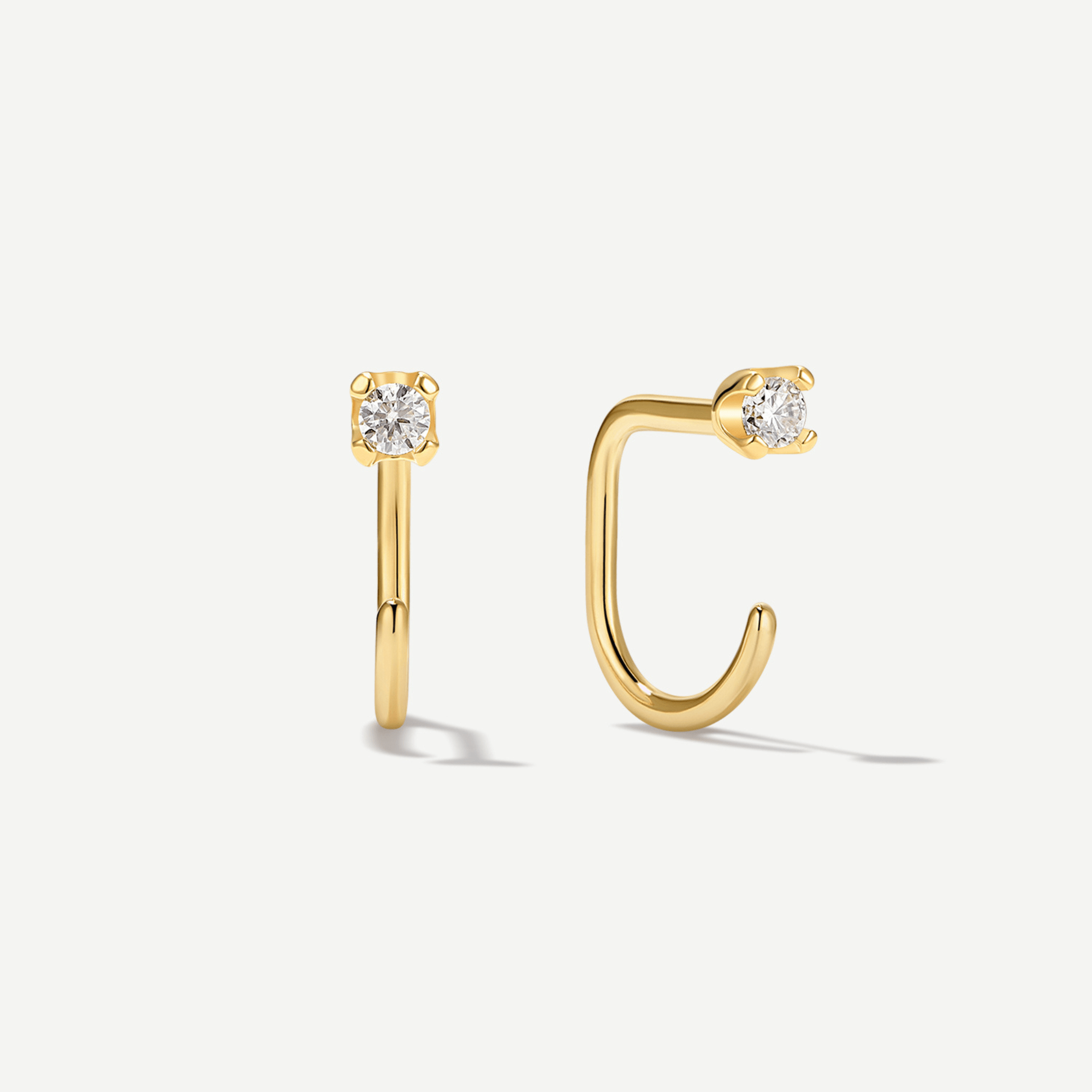
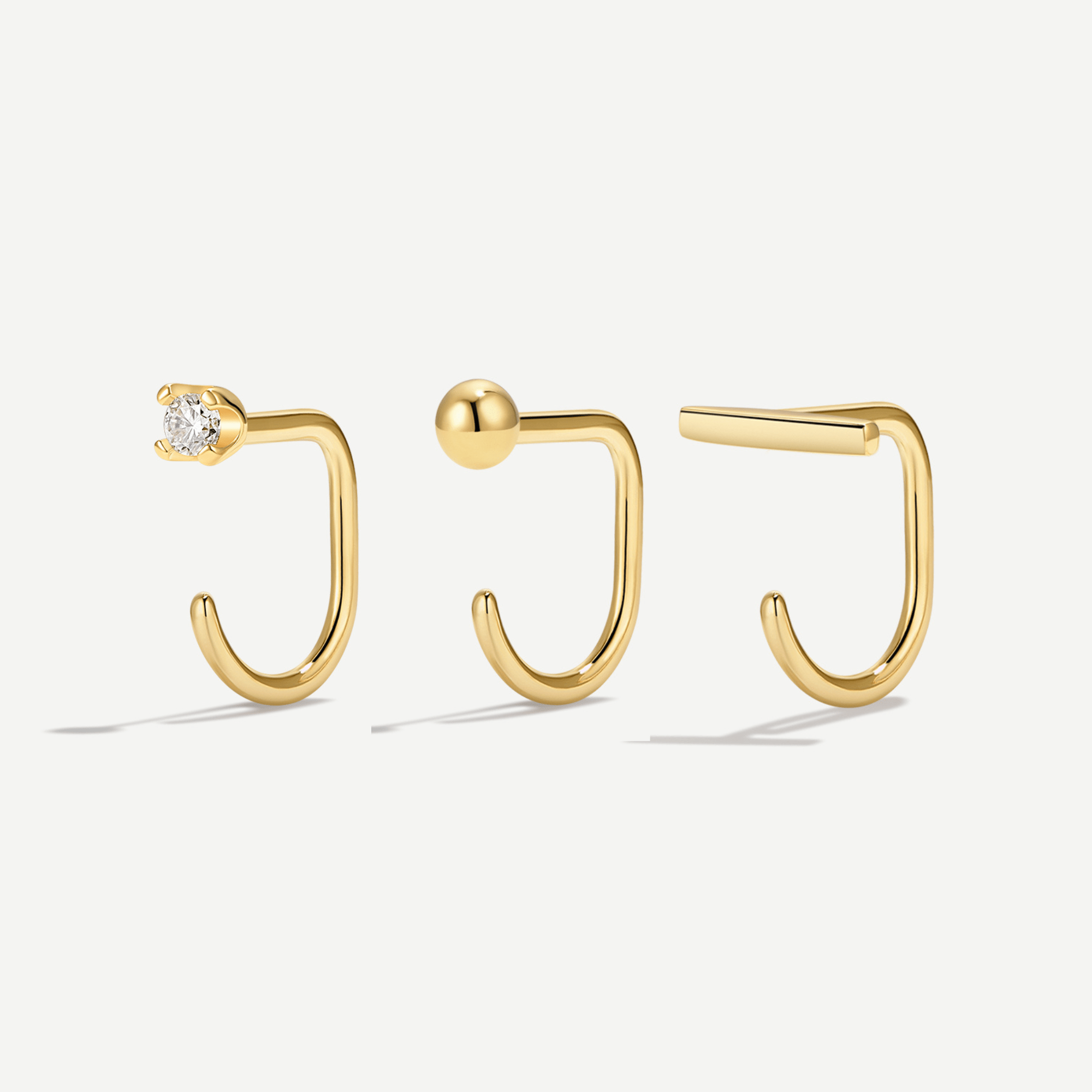
Stay Close Hoop
Backless hook → No traditional rear backing pressing against lobe

THE SIMPLEST WAY I EXPLAIN THE FIX
Take The Backing Off. Know What Metal You’re Putting On.
Once you understand the Backing + Metal Problem, choosing jewelry gets much simpler. You’re looking for two things.
You’re looking for two things.
Less hardware sitting against the back of your ear.
And:
Clearly specified materials.
That’s why the pair I’ve been pointing people toward is Stay Close Hoops.
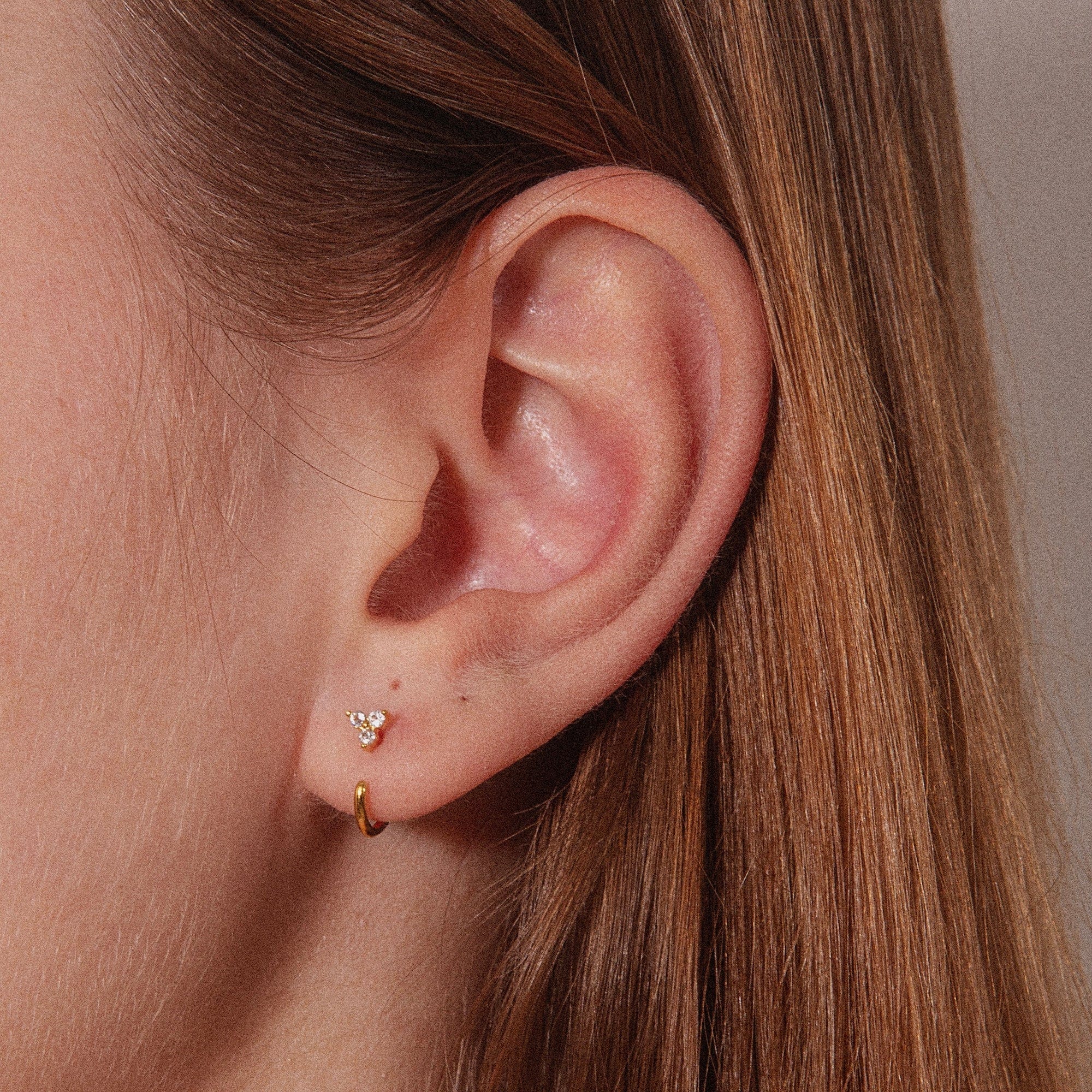
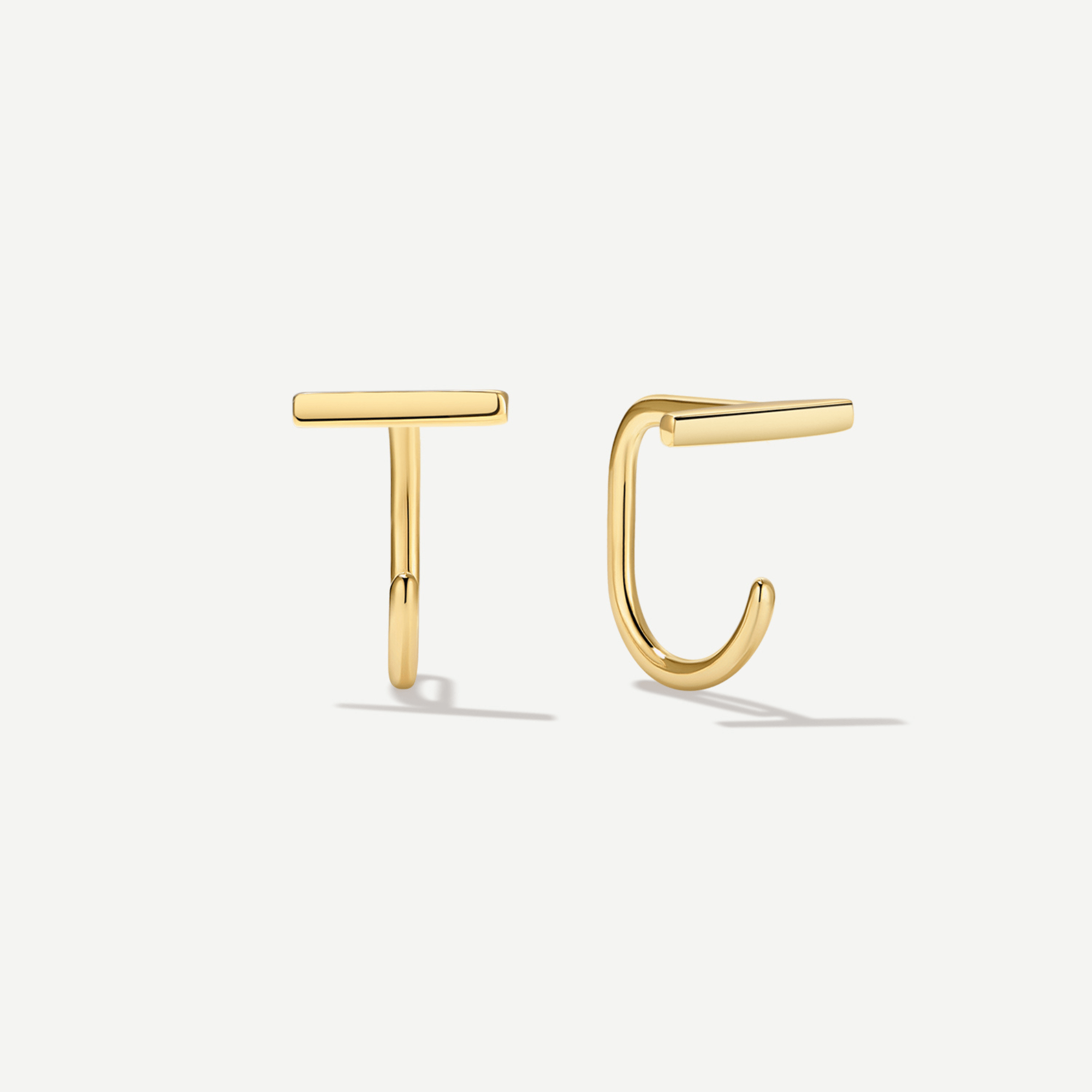
They’re designed differently from a traditional post-and-backing earring.
There’s no butterfly back.
No flat disc.
No separate piece that clamps onto the post behind your lobe.
Instead, the hook is angled so the hoop passes through from the front and stays in place because of its shape.
Nothing needs to be fastened against the back of the ear.
That addresses the first half of the problem.
Then there’s the material.
According to Stay Close’s published specifications, the hoops use 925 sterling silver beneath approximately 3.2 microns of 18K gold, with no nickel or lead listed in the material composition.
The gold layer is substantially thicker than ordinary flash plating and is designed to give you a much more clearly defined material construction than a vague “hypoallergenic” label.
That distinction matters.
Because instead of asking:
“Does the package say sensitive ears?”
You can ask:
“What is this actually made from?”
Instead of:
Unknown base metal + thin plating + rear backing
Stay Close:
18K gold layer + 925 sterling silver base + backless design

AND THEN SOMETHING ELSE CHANGES
At first, most people come to me because they want their ears to stop bothering them.
But that isn't usually the part they get most excited about later.
The bigger change is much simpler:
They start wearing earrings again.
Not for dinner.
Not for two hours before their ears tell them they've had enough.
Normally.
They put them in.
They go to work.
They shower.
They go to the gym.
They lie down without a post digging into the side of their head.
And eventually they stop thinking about the earrings completely.
Which, in my opinion, is how comfortable jewelry should feel.
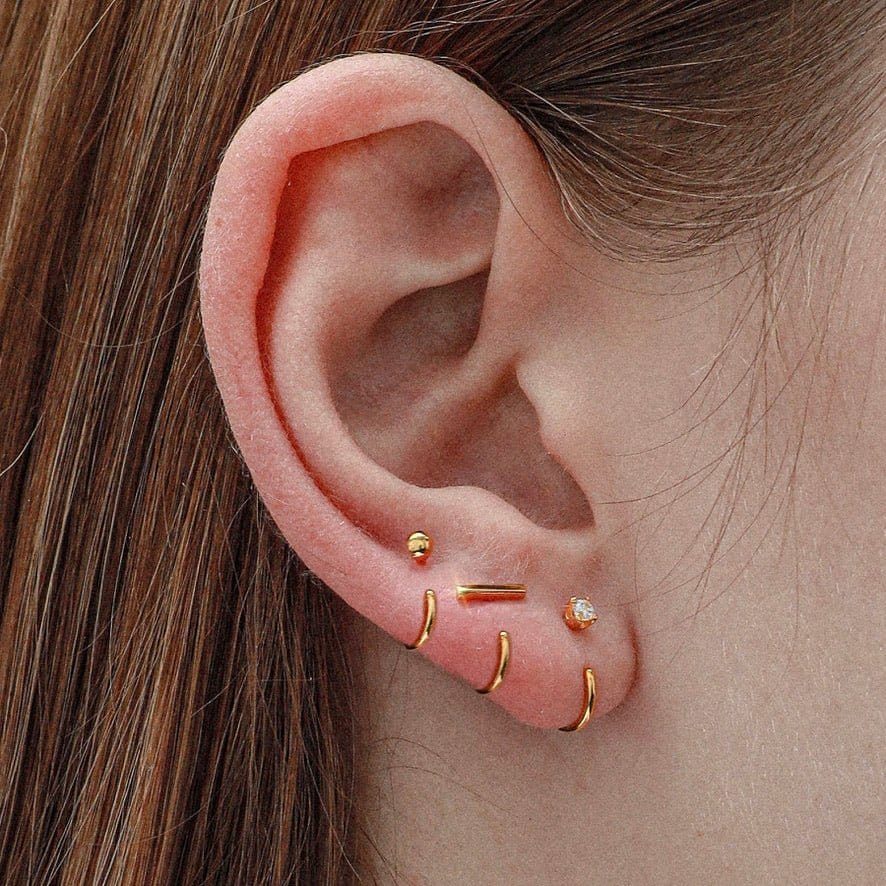
Stay Close Hoops are also designed to gently adjust, so you can shape the hook slightly to sit more snugly against your own ear rather than relying on one completely rigid fit.
Once you've adjusted them, the goal is simple:
Put them in and get on with your day.
For people who quietly stopped wearing earrings years ago because it became too uncomfortable or annoying, that can be a surprisingly big deal.
You're not just getting a different pair of hoops.
You're getting back something you assumed your ears had taken away from you.
I’M NOT THE ONLY ONE HEARING THIS
I can only speak to the ears I’ve personally seen.
But Stay Close says more than 180,000 people have already worn its hoops, and the customer feedback tells a very familiar story.


That doesn’t mean every irritated piercing has the same cause.
And no piece of jewelry is going to be right for every person.
But if you’ve spent years switching between pairs without ever thinking about the backing and the underlying metal, those are two things worth paying attention to.

“BUT THESE COST MORE THAN THE EARRINGS I USUALLY BUY.”
They do.
Stay Close Hoops are not the cheapest pair of earrings you can put in your cart.
But I think there's a better way to judge the price.
Look in the jewelry drawer.
How many pairs are sitting there because they looked good for a week but became uncomfortable?
How many "sensitive ear" earrings did you buy, wear twice, and stop using?
How many times have you paid for another pair hoping:
"Maybe these ones will be different"?
That's the expensive cycle.
A low-priced pair you don't wear isn't especially cheap.
So I wouldn't compare Stay Close to the cheapest hoop on the shelf.
I'd compare them to repeatedly replacing jewelry that never solves the reason you stopped wearing it.
Here, you're paying for a very specific construction:
A backless design.
925 sterling silver.
An approximately 3.2-micron 18K gold layer.
No nickel or lead listed in the material specifications.
And a pair designed to be worn often rather than forgotten at the bottom of a drawer.
“I’VE ALREADY TRIED HYPOALLERGENIC EARRINGS.”
This is probably the objection I hear most.
And it's exactly why I look past that word.
"Hypoallergenic" sounds reassuring.
But I still want to know:
What is the base metal?
Is nickel listed?
What is the outer layer made from?
How substantial is that layer?
And what hardware is sitting behind the ear?
Because switching from one traditional post-and-backing earring to another may change the metal while leaving the contact issue exactly the same.
Or it may change the backing while leaving you unsure about the material.
That's why I like looking at the two issues separately.
Backing.
Metal.
Most alternatives change one variable.
Stay Close is designed around both.
“WHAT ABOUT TITANIUM OR FLATBACKS?”
Those can be great options for plenty of people.
The point isn't that every other earring is bad.
The point is that they solve different problems.
A high-quality material may help you address metal sensitivity while still leaving hardware against the back of the ear.
A different backing may reduce pressure while doing nothing to clarify the material touching your skin.
So I wouldn't ask:
"What is the one universally best earring?"
I'd ask:
"Which part of my current earring seems to be giving me trouble?"
If you want to remove the traditional backing entirely and know what materials you're putting through the piercing, Stay Close gives you a very straightforward answer to both.

“WILL THEY ACTUALLY STAY IN?”
The hook is designed to adjust gently.
That means the first time you put them in, you may need to make a small adjustment so they sit snugly against your particular ear.
Once you find your fit, there’s no separate backing to tighten.
No tiny butterfly back to lose.
And no rigid post sticking out behind your ear.
They're simply designed to sit there.
Which is exactly what I want from everyday earrings.
WHERE I’D START
If you have a piercing that used to be fine and now seems to complain every time you put earrings in, I wouldn't immediately decide:
"My ears just can't wear jewelry anymore."
I'd look at two things first.
What is sitting against the back of the ear?
And:
What material is actually touching the piercing?
If you want to change both variables at once, Stay Close Hoops are a very logical place to start.
No traditional backing.
Clearly specified metal construction.
An adjustable fit.
And a design made around the idea that the most comfortable earring may be the one you eventually forget you're wearing.
For someone who hasn't worn earrings comfortably in years, that's the outcome that matters most.
Wear Earrings Again. Without Thinking About Them All Day.
Best seller collection

$65 USD USD
$65 USD USD
$65 USD
18k gold vermeil
$120 USD USD
$118 USD USD
$88 USD
$92 USD
18k gold vermeil
$95 USD USD
$90 USD USD
$68 USD
18k gold vermeil

$78 USD USD
$75 USD USD
$58 USD
18k gold vermeil


